Atlantic bluefin tuna
Τόνος · Thunnus thynnus
Also called: Bluefin
Rules
Amateurs may not fish for bluefin tuna: it is allowed only from professional boats that hold a special licence. A bluefin tuna that is caught must be released alive at once; if it dies, tell the port authority.
- Source: Hellenic Coast Guard, Fisheries Control Directorate: frequently asked questions (checked on 22/11/2026)
Rules change. Confirm with the port authority before keeping a catch.
How to recognise it
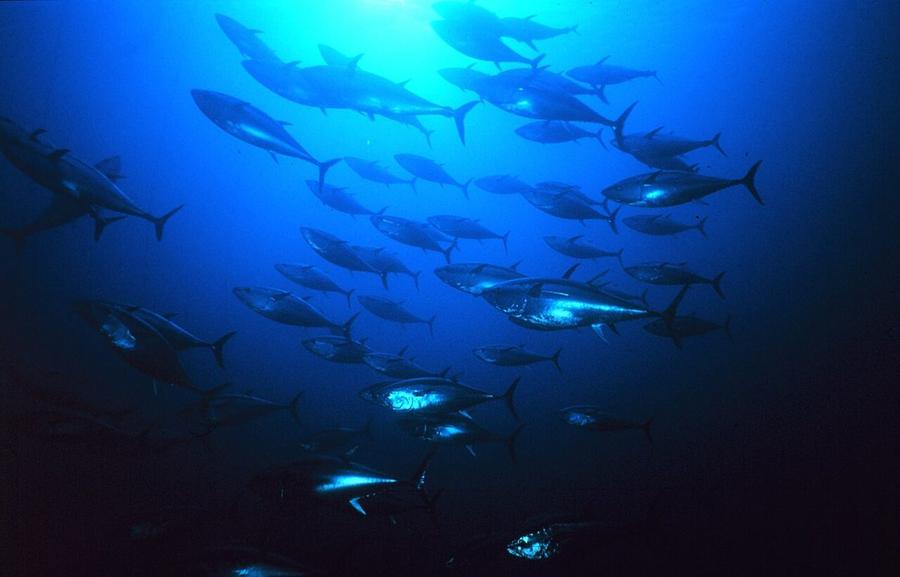
Huge, stout, torpedo-shaped body with a dark blue, almost black back and a silver-white belly. The pectoral fins are short and do not reach the second dorsal fin. The second dorsal fin is reddish brown and the finlets in front of the tail are yellow with a dark edge.
Look-alikes
The albacore (Thunnus alalunga) is much smaller and has very long pectoral fins. The little tunny has wavy marks on the back and spots under the pectoral fin.
When it is around
- Jan: Around
- Feb: Around
- Mar: Around
- Apr: Around
- May: Around
- Jun: Around
- Jul: Around
- Aug: Around
- Sep: Best months
- Oct: Best months
- Nov: Best months
- Dec: Around
- Usual depth
- 0–200 m
- Caught by
- Trolling · Live bait · Spinning · Jigging
The rest is in the app
This page is a short introduction. The Stigmo app has the full guide for this fish:
- The nearest places that suit it, ranked by distance from you
- Today's best hours, from the fishing forecast
- Step-by-step rigs for each method, with tackle sizes
- Baits and lures, and the conditions it likes
The app is being built and has not been released yet.
Draft guide, not yet checked by local anglers. Legal limits are shown only where they were read in an official source; always check the current rules before keeping a catch.