Atlantic horse mackerel
Σαφρίδι (γκριζοσαύριδο) · Trachurus trachurus
Also called: Scad, horse mackerel
Rules
Minimum size: 15 cm
Total length, from the tip of the snout to the end of the tail. A smaller fish goes straight back into the sea.
- Source: Regulation (EU) 2019/1241, Annex IX (Mediterranean), consolidated text of 1 January 2024, EUR-Lex (checked on 22/11/2026)
Rules change. Confirm with the port authority before keeping a catch.
How to recognise it
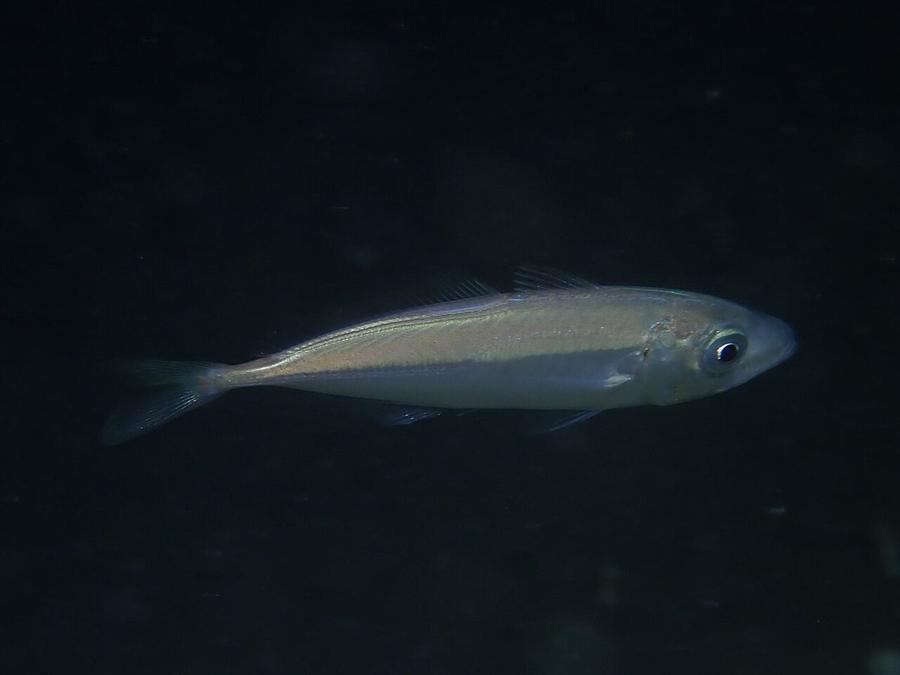
Long body with a grey-green or grey-blue back, silver sides and a very large eye. Tall, hard plates run along the whole lateral line, from the head to the tail. There is a black spot on the edge of the gill cover. Usually 15–30 cm; it can grow beyond 40 cm.
Look-alikes
The Mediterranean horse mackerel (Trachurus mediterraneus) is more common close to shore and in harbours. Its plates on the front, curved part of the lateral line are small and low, becoming tall only towards the tail; its eye is slightly smaller. The two are hard to tell apart and are often caught together. The chub mackerel and the Atlantic mackerel have no plates and have a pattern on the back.
When it is around
- Jan: Around
- Feb: Around
- Mar: Around
- Apr: Around
- May: Around
- Jun: Around
- Jul: Around
- Aug: Around
- Sep: Around
- Oct: Around
- Nov: Around
- Dec: Around
- Usual depth
- 5–200 m
- Caught by
- Handline · Spinning · Float
The rest is in the app
This page is a short introduction. The Stigmo app has the full guide for this fish:
- The nearest places that suit it, ranked by distance from you
- Today's best hours, from the fishing forecast
- Step-by-step rigs for each method, with tackle sizes
- Baits and lures, and the conditions it likes
The app is being built and has not been released yet.
Draft guide, not yet checked by local anglers. Legal limits are shown only where they were read in an official source; always check the current rules before keeping a catch.